
The Evolution of Live Blackjack Strategy in Digital Casinos
The migration of traditional table games into the streaming era has fundamentally altered how players approach decision-making. Live Blackjack Strategy is no longer confined to physical felt tables; it now demands a hybrid understanding of latency, stream integrity, and real-time dealer behavior. 🎰 Operators utilizing optical character recognition and RFID shoe tracking provide transparent card flow, yet the core mathematical probabilities remain untouched. Players must recognize that the digitization of the shoe does not alter the house edge, but it does alter the speed of the game—often exceeding 200 hands per hour in turbo variants. This acceleration magnifies the cost of errors, making a rigorously pre-committed strategy chart non-negotiable.
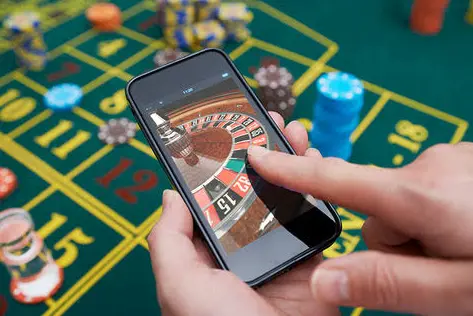
Foundational Mathematics and Basic Strategy Deviations
A credible Live Blackjack Strategy begins with the immutable laws of basic strategy, a decision matrix derived from exhaustive combinatorial analysis. However, elite practitioners understand that live dealer environments introduce subtle deviations. For instance, the penetration depth of the shoe—how far the dealer deals before shuffling—directly influences the efficacy of card counting techniques. In a 6-deck shoe with 75% penetration, the true count fluctuations are statistically significant. Conversely, continuous shuffling machines (CSMs) neutralize counting entirely, forcing a pivot to flat-betting or advantage play via promotional exploitation. The formal terminology here is "penetration rate" and "true count conversion," metrics that separate the recreational participant from the informed tactician.

Psychological Fortitude and Bankroll Architecture
The psychological dimension of Live Blackjack Strategy cannot be overstated. Streaming interfaces facilitate a phenomenon known as "tilt acceleration," where rapid losses trigger impulsive deviations from the strategy chart. To counter this, professional operatives employ a strict bankroll architecture: unit sizing based on risk of ruin formulas, typically capping individual wagers at 1-2% of total capital. Furthermore, the absence of physical chips reduces the tactile feedback of loss, paradoxically increasing risk tolerance in novice players. 🃏 A disciplined approach mandates pre-session loss limits and time-based stop-loss triggers, leveraging the platform's built-in session analytics to enforce objectivity.
Exploiting Live Dealer Patterns and Interface Asymmetries
While pure strategy relies on mathematics, the live environment offers exploitable asymmetries. Dealer tells—subtle hesitations or physical cues—are largely extinct in professional settings, yet digital latency can create arbitrage opportunities in side bets. For example, the "Perfect Pairs" or "21+3" propositions often carry house edges exceeding 5%, but during peak streaming hours, some platforms misprice these derivatives due to bandwidth constraints. A sophisticated Live Blackjack Strategy monitors these inefficiencies. Additionally, understanding the distinction between "early surrender" and "late surrender" options is critical; the former is exceedingly rare but reduces house edge by 0.39% when available. Verifying rule variations—dealer stands on soft 17 versus hits—remains the single most impactful pre-play audit a player can perform.
Technological Integration and Responsible Execution
Modern practitioners integrate third-party software for real-time basic strategy feedback, though reliance on such tools may violate terms of service. The ethical and sustainable approach involves internalizing the chart through deliberate practice. 🎲 Platforms now offer "demo shoes" with identical random number generation seeds to live tables, allowing strategy rehearsal without financial exposure. Ultimately, the most robust Live Blackjack Strategy is one that acknowledges the immutable house edge while optimizing decision velocity and emotional regulation. The stream never sleeps, but the disciplined mind dictates when to log off.